
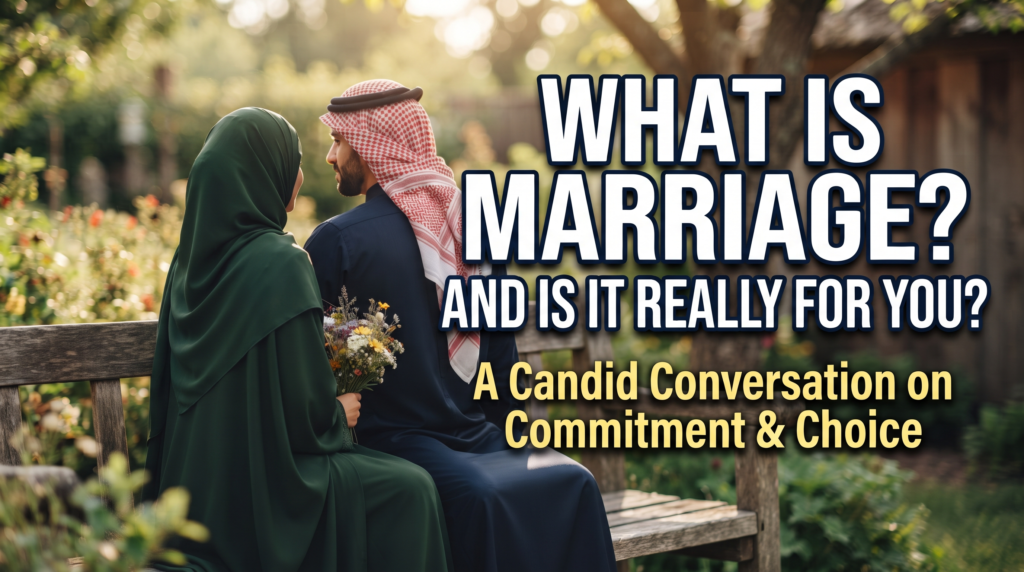

Marriage is one of those words everyone thinks they understand — until they try to define it for themselves. Is it a legal contract? A spiritual bond? A social expectation? A lifelong partnership built on love? The honest answer is: it’s all of these, and which parts matter most depends entirely on you.
If you’ve found yourself asking “what is marriage, really — and is it something I actually want?”, you’re not alone. This guide breaks down what marriage means today, what it actually involves, and how to figure out whether it’s the right path for you (or the right path right now).
What Is Marriage, Exactly?
At its core, marriage is a formally recognized union between two people that combines emotional commitment with legal, social, and often religious significance. But that definition only scratches the surface. Marriage typically involves several layers:
- Legal commitment — shared rights around finances, property, healthcare decisions, and inheritance.
- Emotional partnership — a promise to build a life together, through both good times and hard ones.
- Social recognition — a public declaration to family, friends, and community that this relationship is a priority.
- Personal or spiritual meaning — for many, marriage carries religious or cultural weight that goes beyond the legal paperwork.
None of these layers is optional or extra — together, they’re what separates marriage from simply living with or loving someone long-term. That’s also why the decision to marry deserves more thought than “we love each other, so let’s do it.”
Why People Choose to Get Married
People marry for genuinely different reasons, and none of them are wrong on their own. Common motivations include:
- Companionship — wanting a committed partner to build a life with.
- Family and children — creating a stable structure to raise a family.
- Legal and financial benefits — shared health insurance, tax advantages, inheritance rights, and next-of-kin status.
- Cultural or religious expectation — many communities view marriage as a meaningful rite of passage.
- Emotional security — the reassurance of a formalized, long-term commitment.
Practical takeaway: Before you get swept up in the idea of marriage, get specific about your reason. “Because it feels like the next step” is different from “because I’ve found a partner I genuinely want to build a life with” — and that distinction matters more than it might seem.
The Benefits of Marriage
Research and lived experience both point to real advantages that marriage can offer:
- Emotional support — having a consistent partner to lean on during stress, illness, or major life changes.
- Financial stability — shared income, expenses, and long-term planning (like retirement or buying a home) tend to be easier as a legally recognized unit.
- Health benefits — studies have repeatedly linked stable marriages to better mental and physical health outcomes.
- Legal protections — decision-making rights in medical emergencies, inheritance without lengthy legal processes, and clearer custody frameworks if children are involved.
- A defined partnership — some people simply feel more secure operating as a team with clear mutual commitment.
The Challenges of Marriage
It’s just as important to go in with clear eyes about what marriage asks of you:
- Compromise becomes constant. Big and small decisions — from finances to how you spend weekends — now involve another person.
- Conflict is inevitable. Even strong couples disagree; the difference is how they handle it.
- It requires ongoing effort. Marriage isn’t a finish line — it’s a relationship you keep choosing to invest in.
- Legal entanglement cuts both ways. The same legal protections that offer security also make separation more complex if the marriage doesn’t work out.
- Individual identity can get blurred. Balancing “we” and “me” is an ongoing skill, not something you figure out once.
Practical takeaway: If the challenges above sound manageable to you — even if they’re not exciting — that’s actually a healthy sign. Going in expecting some friction is far more realistic than expecting none.
Is Marriage for You? 6 Questions to Ask Yourself
There’s no universal checklist for “ready,” but these questions can help you get honest with yourself:
- Do you want partnership, or do you want a wedding? These are different goals. One is about the daily reality of building a life together; the other is a single event.
- Can you communicate through conflict, not just around it? Marriages don’t fail because couples disagree — they struggle when couples can’t talk through disagreement productively.
- Do your life goals actually align? Kids or no kids, where you’ll live, how you’ll handle money — these conversations matter more before marriage than after.
- Are you choosing this for yourself, or to meet someone else’s expectations? Family pressure, social timelines, or fear of being “left behind” are common — but they’re not the same as genuine readiness.
- Can you picture ordinary life with this person, not just the highlights? Grocery runs, sick days, and slow Tuesday nights say more about compatibility than vacations do.
- Are you financially and emotionally prepared for shared responsibility? You don’t need to have everything figured out, but you should be able to have honest conversations about both.
If you answered these questions and felt more clarity than dread, that’s a meaningful signal. If you felt mostly uncertainty or pressure, that’s worth exploring — with a partner, a therapist, or simply more time — before moving forward.
Marriage Isn’t the Only Valid Path
It’s worth saying plainly: marriage isn’t a requirement for a meaningful life or a serious relationship. Long-term partnerships, committed cohabitation, and other relationship structures are valid choices for many people. Marriage tends to work best for those who want its specific legal, social, and emotional framework — not for everyone, and not on any fixed timeline.
There’s no prize for marrying young, and no penalty for marrying later — or not at all. What matters most is that the choice, whenever and however you make it, is genuinely yours.
Final Thoughts
Marriage is a legal, emotional, and often spiritual commitment that asks a lot of two people — and can offer just as much in return. It’s not inherently “the next step” after dating, and it’s not something to enter because of a deadline, whether that deadline is social, familial, or self-imposed.
The better question isn’t “should everyone get married?” It’s: “Do I understand what marriage actually asks of me, and do I want to say yes to that — with this person, at this point in my life?”
If your honest answer is yes, that’s worth taking seriously. If it’s not yet, that’s worth taking seriously too.
Frequently Asked Questions
What is the legal definition of marriage? Legally, marriage is a formally recognized union between two people that grants specific rights and responsibilities, such as shared property, tax benefits, healthcare decision-making, and inheritance — the exact details vary by country and jurisdiction.
How do I know if I’m ready for marriage? Readiness usually shows up as clarity, not certainty. You don’t need every answer figured out, but you should be able to communicate openly, handle conflict constructively, and align on major life goals with your partner.
Is it normal to have doubts before marriage? Yes — mild pre-wedding nerves are common and don’t necessarily mean something is wrong. Persistent, serious doubts about your partner or the relationship’s foundation are different and worth addressing directly before moving forward.
Can a relationship be serious and committed without marriage? Absolutely. Long-term partnerships and cohabitation can offer the same emotional depth and commitment as marriage; they simply don’t carry the same legal framework.